
How to Track and Measure Success in Google Discover
Google Discover is a powerful tool that aims to provide personalized content based on users’ interests, allowing content creators to reach a wider audience. It takes into account the users’ browsing habits and behaviour, as well as their search history. Like any marketing tool, there are some metrics that need to be tracked to measure Google Discover’s success. In this blog, we will go through these metrics and explain the importance of each one to ensure that your content is doing well.
How to See the Traffic of Google Discover?
To track your content success on Google Discover, you need to check it on Google Search Console. Here, you can see how much exactly your content is receiving a traffic each day, or for a specific period of time.
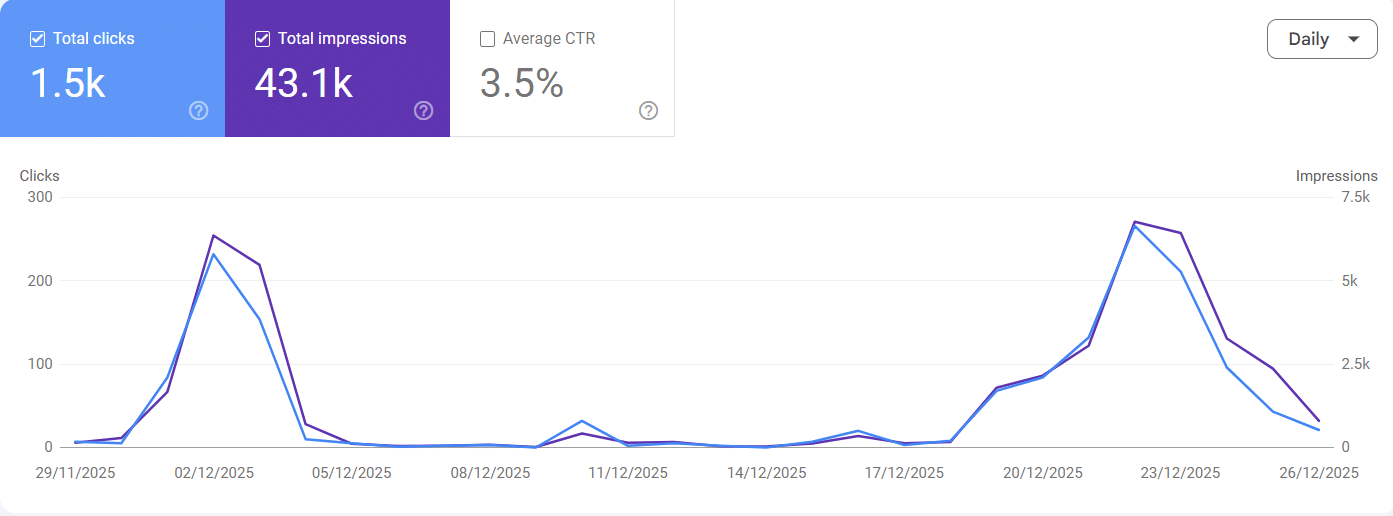
Also, you can check the traffic, impressions, and clicks that each article receives on Google Discover. These insights are important to create a pattern, as if something is working, it means that your audience likes it, so you would create more similar content.
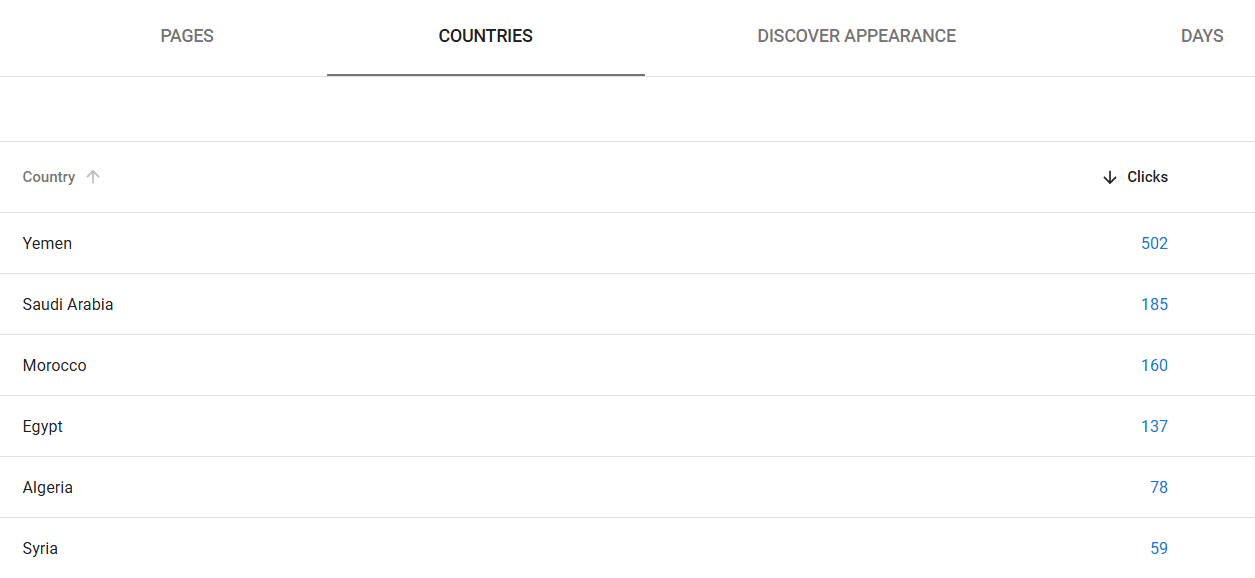
In addition, you can track Google Discover performance per country, providing more accurate results and data in order to create customized content for each target audience.
Metrics to Measure Google Discover’s Success
Since Google Discover is customized content in its very core, the results might vary depending on users’ interests; however, there are some main points that you need to keep your eye on to measure your content success.
-
1. Impressions
The impression is the number of times your content appears in the users’ Google Discover feed. Every time your content is displayed in the feed, it counts as an impression, regardless of whether the user clicks on it or not.
High impressions mean that your content is wanted across a wide range of audiences in your industry, meaning that it reaches to large number of people. However, impressions alone are not enough to measure Google Discover’s success, but they can be an indication of awareness.
-
2. Clicks
As the name suggests, clicks refer to the times users actually take action and click on your content that appears in the Google Discover feed. By dividing the number of clicks by the number of impressions, you can have the click-through rate (CTR), which shows the percentage of people who engaged with your content and clicked on the article.
High CTR indicates that your content is engaging and meets people’s interests, but if the CTR is low, it means that you need to enhance your content (headings or visuals).
-
3. Average Position
Average position is an important metric of Google Discover’s success. It refers to where your content ranks in the Google Discover feed among other competitors. Unlike traditional search, where results are shown in a ranked list for a query, Discover feeds aren’t keyword-based search results pages; they’re personalized content streams. Discover content has an internal ranking order when shown to users (based on relevance and engagement likelihood).
-
4. Traffic from Google Discover
This metric shows the number of referrals that come to your website directly from Google Discover. It gives a good indication of how engaging your content is, and it helps you optimize your strategy to increase this traffic.
You can track traffic from Google Discover using Google Analytics tool. In the “Acquisition” section, look for “Google Discover” under the referral sources to measure this traffic.
-
5. Content Type Performance
Google Discover is not only about articles, but it also includes videos and images. It’s essential to track the performance of each content type to know which one is performing better, enabling you to optimize your content strategy accordingly. For instance, you might find that visual-based content drives more traffic than text-based content for a certain audience or a certain topic.
How to Drive More Success on Google Discover
Google Discover’s success depends on a whole strategy of enhancement that includes many aspects.
-
Create High-quality Content
Google Discover prefers original content that adds value and delivers a top-notch user experience. When talking about content that adds value, we refer to how the content impacts your audience and meets their interests. To master this, it’s important to know your audience so you can create the right type of content that engages with users.
-
Optimize for Mobile
Since Google Discover is associated with the mobile feed page, optimizing visuals to fit in mobile screens isn’t a luxury. Also, your site itself needs to be mobile-friendly and deliver a good user experience on all kinds of phones (Android and IOS), which is reflected in the menu and buttons on your website. Adding to that, the content must be clear and offer an easy journey for mobile users.
-
Leverage SEO Best Practices
Even though Google Discover isn’t query-based like the traditional Google search, SEO still plays a crucial part in Google Discover’s success. Here, we refer to all SEO aspects: on-page, off-page, link building and technical.
Make sure to create attractive headings, meta tags and insert visuals. Backlinks are still part of the game, as high-quality links are treated as a trustworthiness signal. Adding to that, loading speed and mobile friendliness are counted in Google Discover’s ranking.
Common Mistakes to Avoid
While Google Discover can drive significant traffic, many sites fail to get the real benefit of it due to common mistakes. To guarantee Google Discover’s success, you need to avoid the following:
-
Misleading Headlines
It’s right that attractive headings drive more clicks, but it may lead to poor engagement or high bounce rates if they are misleading and unrelated to the content. Make sure that your headlines reflect the content (text and visuals) in your article.
-
Low-quality Visuals
Images play a critical role in increasing engagement and traffic; however, using low-quality images might limit the reach of your content.
-
Over Promotional Tone
It’s understandable that everything you do, from SEO to Google Discover, is a way to get more leads or purchases, yet the over-promotional tone of voice isn’t the way to do it. Google cares about authenticity. To do so, craft content that actually adds value and addresses your audience’s interests.
FAQs
- 1. How would you measure the success of Google Search results?
The success of Google Search results is usually measured through metrics such as impressions, clicks, click-through rate (CTR), average position, and organic traffic. These metrics indicate how visible your content is in search results, how often users engage with it, and how well it ranks compared to competitors. While Google Discover is not query-based, many of these metrics are still used to evaluate performance in a personalized feed environment.
- 2. How to identify Google Discover traffic?
Google Discover traffic can be identified using Google Search Console and Google Analytics. In Google Search Console, you can access the Discover report under the Performance section to see impressions, clicks, CTR, and average position. In Google Analytics, Discover traffic appears under referral sources, allowing you to track how many users land on your website directly from Google Discover.
- 3. How to succeed in Google Discover?
Success in Google Discover depends on creating high-quality, original content that matches users’ interests and delivers real value. Optimizing for mobile, using engaging visuals, and following SEO best practices—such as strong headlines, fast loading speed, and mobile-friendly design—are essential. Understanding your audience and consistently producing content that aligns with their behavior increases your chances of appearing more frequently in Discover feeds.
- 4. Does Google Discover rely on keywords like Google Search?
No, Google Discover does not rely on keywords in the same way as traditional Google Search. Instead of responding to search queries, Discover uses users’ interests, browsing behavior, and engagement signals to surface relevant content. However, SEO fundamentals still matter, as clear structure, strong headings, and technical optimization help Google understand and rank your content.