
Understanding Google Discover: What Marketers Need to Know.
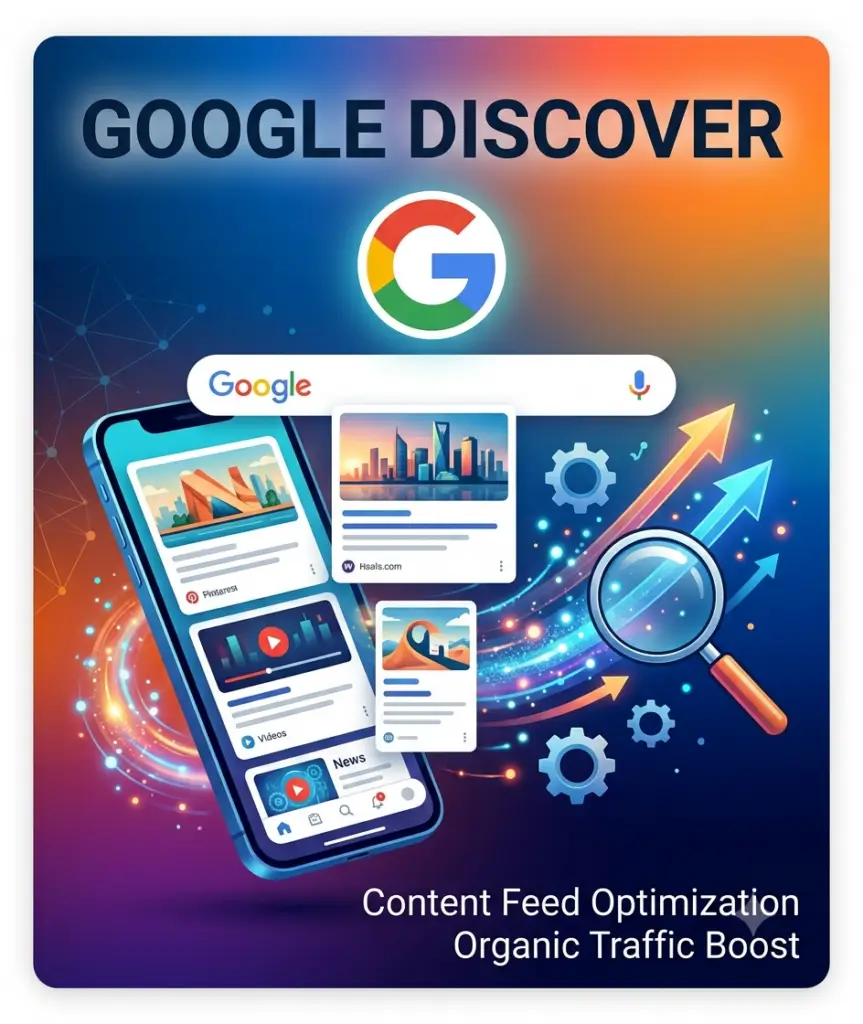
The search landscape is evolving faster than we imagine! And now we are reaching a point where you don’t have to search for information; information pops up in your feed based on your interests. This is essentially Google Discover, a personalized content feed powered by user interests, behavior, and a little machine learning. This user-centered approach has opened new avenues for businesses to increase visibility and grow their customer base. But what exactly is Google Discover? How does it work, and how can businesses utilize it to add value? These are some of the questions we will tackle in this article.
What Is Google Discover and How Does It Work?
We can think of Google Discover somewhat like a social media platform for Google. Much like other social media, users don’t search for queries; rather, algorithms push certain topics based on how they use and interact with them. This is Google Discover in its essence, according to Google: “It is a personalized content feed that helps users find relevant information and explore their interests. It provides various types of content, including articles, videos, and social posts, from various publishers and creators.”
To work, Discover leverages Google’s own algorithms to make this personalization possible for all users. The platform analyzes signals such as search history, browsing behavior, and content interactions (what users read, click, and ignore) to help Google understand what topics a user is interested in. But it doesn’t stop there; using machine learning algorithms, the platform also predicts what the user is interested in seeing at a given moment and then pushes related content to the surface.
Google Discover vs Search: How is Google Discover Different from Google Search?
The key difference between these two platforms is the dependence of search queries. In Google search, users have to type in their queries to get results and answers. However, in Google Discover, the user doesn’t need to search for anything; the moment they open the platform, they will get engaging content in card-style formats on the mobile app. So, we can say that Search is “search-based,” while Discover is “interest-based.”
Why is Google Discover Important for Marketers?
Since Discover is Interest-based, businesses that use the platform already have an edge in reaching customers interested in their services without even relying on search intent! This allows marketers to introduce their brand at the awareness stage, when users are most open to discovering new information. This also means that, unlike traditional SEO, the game is beyond ranking and keywords; one piece of high-quality content can generate large bursts of exposure organically. Furthermore, repeated exposure in personalized feeds builds trust and recognition, thereby increasing the brand’s authority.
Can Every Website Appear on Google Discover?
Discover highly considers users’ interests and, in theory, any website indexed on Google can appear on Discover; however, it doesn’t allow “any” website to appear on the feed. First, we know that it favors News, trending events, sports, entertainment, lifestyle, and Visual and Engaging Content. But it also has some unspoken rules that determine eligibility, such as: following the content guidelines, using HTTPS, conveying strong authority and trust signals, following the technical requirements, and so on.
These rules are meant to filter out content that relies on flashy clickbait without real value, duplicate or non-original content pieces, or purely promotional pages. Looking at this, we can conclude that Discover supports content that provides real benefit and added value to users, while also prioritizing security.
That said, eligibility doesn’t guarantee visibility, as it depends on content performance, authority, and user engagement over time.
Google Discover SEO Tips: How to Start Optimizing Content for Google Discover?
To optimize your website to appear on Discover, think of these steps:
-
Start With Content Quality and Intent
Write original content that actually answers and fulfills the users’ intent. Plus, stay ahead by delivering answers to questions your readers care about before they even search for them, by understanding their intent.
-
Write Compelling, Natural Headlines
Clickbait doesn’t work in Discover! If you want to stay visible, write compelling headlines that drive traffic without being misleading.
-
Use High-Quality Visuals
Images speak volumes in Discover. Make sure you use original, relevant images in your content pieces.
-
Keep E-E-A-T in Mind
A small trick, like showcasing your authors and their expertise, will do wonders for building strong brand authority in both Google’s and customers’ minds.
-
Ensure Technical Readiness
Pages must be indexable, mobile-friendly, fast-loading, and served over HTTPS. Poor technical foundations limit Discover eligibility.
-
Monitor Discover Performance in Search Console
It is smart to use the Discover report in Google Search Console to identify which topics, formats, and headlines perform best, then refine your strategy accordingly.
Common Mistakes That Prevent Content from Appearing on Discover
Knowing what to avoid is as important as knowing what to do in Discover. So, here are some common mistakes to avoid while strategizing your Discover plan.
-
Overusing clickbait or misleading headlines
Discover penalizes exaggerated or deceptive titles. If your headlines promise more than the content delivers, visibility quickly drops.
-
Low-quality or irrelevant visuals
Small, generic, or stock images reduce Discover eligibility. Your visuals must be high-quality, relevant, and optimized for mobile-first experiences.
-
Thin or low-value content
If your content lacks depth, originality, or clear value, it is unlikely to surface. Focus on meaningful insights, not filler content.
-
Weak authority and trust signals
Missing author information, unclear brand credibility, or inconsistent expertise limit Discover’s exposure, especially in sensitive or competitive topics. Always keep E-E-A-T in mind.
-
Ignoring freshness and relevance
Outdated or untimely content struggles in Discover feeds. Even evergreen content requires regular updates to stay relevant.
-
Over-optimization for keywords
Keyword stuffing and SEO-heavy phrasing often backfire because Discover prioritizes natural language and audience relevance over exact-match optimization.
-
Technical issues that block eligibility
Non-indexable pages, poor mobile experience, slow load times, or lack of HTTPS can quietly prevent content from appearing.
Conclusion
To summarise: Google Discover is a powerful platform that drives organic traffic and expands your brand’s visibility to customers who are already interested in your niche. Knowing how to optimize your content to appear on Discover will maximize its impact.